
Sharada Iyer — Tennis With An Accent
During the 2023 Wimbledon fortnight, several bits of trivia emerged. One mentioned two plot points. The first was the longevity of the “Big Four” players who kept rotating as the men’s singles title-holders at Wimbledon for 20 years. The second was that Carlos Alcaraz hadn’t even been born when someone other than these four – Djokovic, Federer, Nadal, and Murray — had won The Championships at SW19.
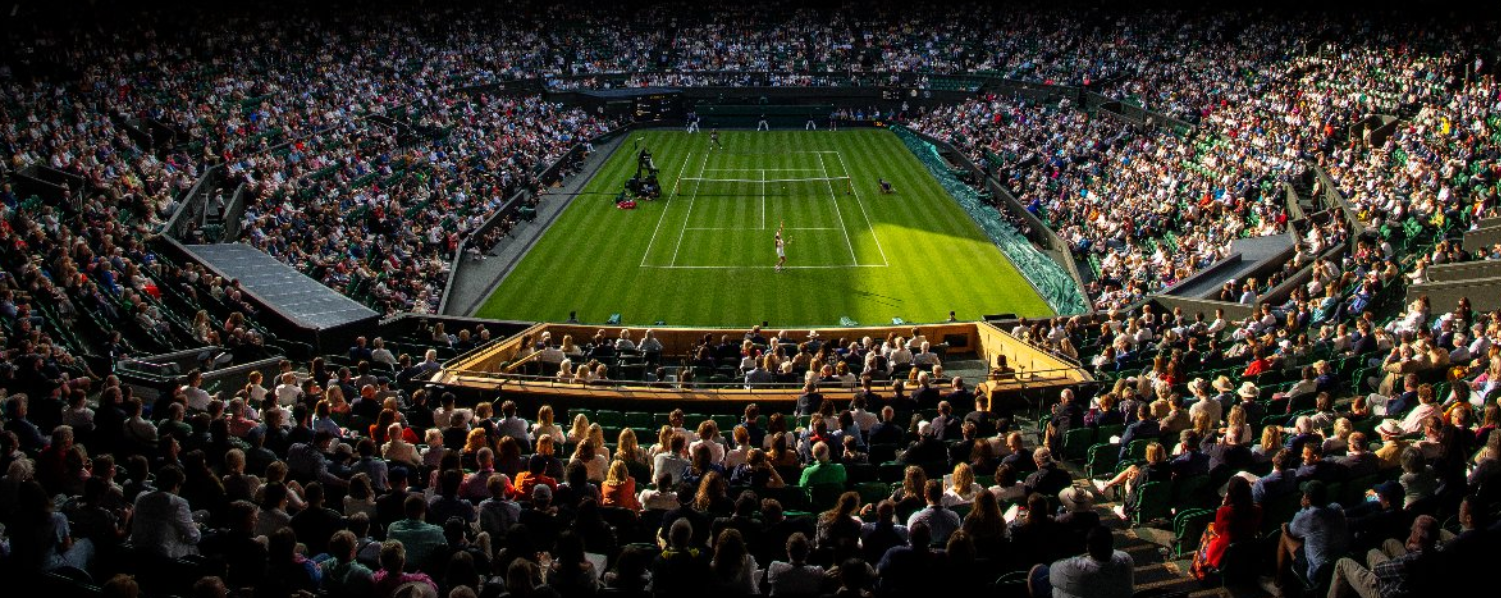
Fittingly, on Sunday, Alcaraz did end the two-decade run of the eponymous “Big Four” by defeating one of its still-active members, seven-time Wimbledon champion Novak Djokovic. It took him a while to do so. Eventually, the full five sets and four hours and 43 minutes offered a testimony to the full scale of his accomplishment on Centre Court at the age of 20.
That’s it. This is the point where this article stops being about Carlos Alcaraz and veers in the direction of generational lapses across these 20 summers at the All-England Club.
Consider this for a moment. In the 20 years of Roger Federer, Rafael Nadal, Andy Murray and Djokovic’s domination at Wimbledon (2003-2022), only 10 of those years didn’t feature two men from that quartet in the final (2003-2005, 2009-2010, 2016-2018, 2021-2022). Also, within these 10 years, there was only one player outside the Big Four who made it to the final on more than one occasion.
That player is Andy Roddick. The American reached three finals, in 2004-05 and 2009, and lost all of them to Roger Federer, who bagged his second, third and sixth Wimbledon titles at this expense. But apart from Roddick, the only other players who’ve made it to at least two Wimbledon finals have been these “Big Four” guys themselves.
Federer’s the one who lost the most finals, in 2008, 2014-15, and 2019. Nadal finished as the runner-up thrice, in 2006-07 and 2011. Now, Djokovic has lost two finals exactly a decade apart, in 2013 and 2023.
So, where did the rest of the 128-man field go then, year-on-year, for two decades?
Barring injuries and injury-related rehabs that forced players to stay out of contention over the years, it’s jarring to observe that barely any player managed to elevate his level to try and challenge these uninterrupted champions more consistently. Granted these guys often played at levels that were unplayable in certain years, but this hasn’t always been the case.
To quote Djokovic from his speech during the presentation ceremony after Sunday’s final, “Obviously you never like to lose matches like this but I guess when all the emotions are settled, I have to still be very grateful because I won many, many tight and close matches in the past year. To name a few, 2019 against Roger in that (Wimbledon) final where I was match points down. Maybe I should have lost a couple of finals that I won. So, I think this is even-steven.”
This acknowledgement from Djokovic, as significant as it was in its honesty, was also an admission-of-sorts that his opponents failed to get him on-court. Not that he minded he had won in such a manner, but as a competitor, it wasn’t surprising to see that Djokovic hadn’t cottoned to the idea that things were getting too simple for him at an age when he, as the older and seasoned entrant in draws, had to have been facing a survival crisis.
Beyond this statement, the 23-time Grand Slam winner’s next words once again emphasized the essence of Alcaraz’s success.
“I will be (proud of my achievements) tomorrow morning, probably. Today, not so much. Obviously, tough one to swallow, you know? I mean when you are so close, but again these are the moments that we work for every single day to be able to play in (the) biggest stages and biggest courts, the most important tournaments in the world,” the 36-year-old observed.
Alcaraz bridged the gap between words and actions throughout the course of the final. More importantly, he did so barely a month after a stinging French Open semifinal defeat in which his mental woes overburdened his body. On top of this, he did so after recovering from an equally harsh first-set beatdown on Sunday in which he won just one game.
But, in the end, this is what champions are expected – and ought – to do: to rise to the demands of the contest and then set about playing their hearts out. The results might not always work out, but making an attempt is still half the battle won, giving them a leg-up like no other.
 Tennis with an Accent