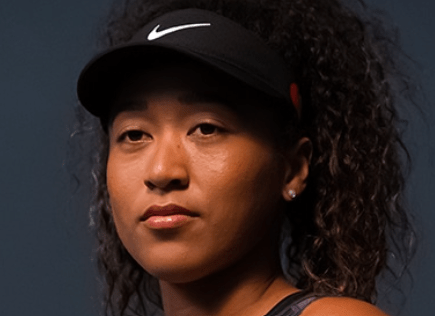

Sharada Iyer, Tennis With An Accent
On Sunday, in the deciding set of her first-round match at the French Open against Italy’s Lucia Bronzetti, Naomi Osaka couldn’t control her frustrations as the Italian sprang a shock comeback from 0-4 to 5-4. It was understandable. The 26-year-old Osaka had gone from being within reach of a 5-0 lead to squandering her double-break entirely.
In the end, Osaka pulled through 6-1, 4-6, 7-5. Her win was due to quickly setting these unexpected inconveniences aside and fortuitousness, too, coming to her aid.
Interestingly, prior to the start of the Slam, in her pre-tournament press conference, Osaka had spoken about how she, as a competitor, had learned to treat the clay season.
“I would say my lessons for this clay court season so far are just taking everything in stride. I think I’m the type of person that if I lose a point or if I lose a game, I tend to really get down on myself. But I think just learning through those points and taking everything as an opportunity for me is one of the biggest lessons I have learned so far,” she said.
Against Bronzetti, when her game blipped briefly, Osaka did exactly as what she’d said to the press. However, beyond the trajectory of how the match unfolded and ended, the victory in itself was huge for the former World No. 1.
It’s the only second time Osaka’s made it to the round of 64 in the French capital. Not that her best result has been much better – she’s reached the third round on three occasions in the seven years she’s played the French Slam. How far she goes in the draw remains to be seen – with a potential second-round match against two-time defending champion Iga Swiatek looming – but for now, this has been quite a start for the four-time Slam champion.
In the same press conference, Osaka had also noted, “I think I have made a significant amount of progress, and I feel like people can kind of see that throughout the tournaments that I have played, but I feel like I have dedicated a lot of time to learning about clay. I don’t know. I just want to do well, and I want to keep beating really good players. Hopefully the last stop here I’ll play well too.”
Looking back at her results on clay this year, apart from her win over Bronzetti, it’s obvious why Osaka feels the takeaways have been positive for her, despite not being perfect.
Of the three tournaments she played before coming to Paris, Osaka exited early in two – at the WTA 250 in Rouen and the WTA 1000 in Madrid. At the WTA 1000 in Rome though, she posted back-to-back upsets over the 19th seed Marta Kostyuk and the 10th seed Daria Kasatkina in the second and third rounds to reach the fourth round.
Qinwen Zheng beat Osaka in that match, but regardless of that defeat, the Japanese had set the momentum for herself while, to borrow her own words, “while taking everything in stride”.
Against Swiatek, who’s the overwhelming favourite at Roland Garros even before she’s stepped onto the court to play her first match, Osaka wants to keep doing what’s worked for her so far. Even as she absorbs the potency of what her younger rival has built for herself in Paris in the last few years.
“The next round is the only round I know, so that’s all I’m going to focus on. I’m honestly really excited. I watched her (Swiatek) a lot when I was pregnant. And honestly, I think it’s an honour to play her in the French Open, because she’s won more than once here, for sure. It’s a very big honour and challenge for me,” said Osaka about the much-awaited match-up between the two Slam champions.
From being someone who’s willing to acquire new tennis-playing skill sets to being a player who knows how to keep herself centred after having been to the sport’s summit herself, this is quite a quick transition of perspectives for Osaka.
Five months into her comeback from her maternity break, even more than her results and the status of her rankings, it’s this ability to introspect on herself as a player that makes Naomi Osaka a champion. The results might not be in her favour now, but as a contender, she’s already beginning to will for them to be, as if she were picking up her stride, too, for the change in surfaces beyond the red dirt.
 Tennis with an Accent